
Improving Content Organization, Automation, and User Experience Across SharePoint and Microsoft 365
As SharePoint and Microsoft 365 continue to evolve, organizations have more tools than ever to organize content, automate metadata, and improve how users interact with information. However, these features only deliver real value when they’re implemented with intentional structure and governance.
In this session, the dataBridge team explored updates and concepts that help organizations design better information architecture, work faster in Microsoft Teams, automate document classification, and modernize SharePoint page experiences.
Below is a recap of the key topics covered—and why they matter. This is one of the many areas where our SharePoint Consulting Services help organizations move from features to strategy.
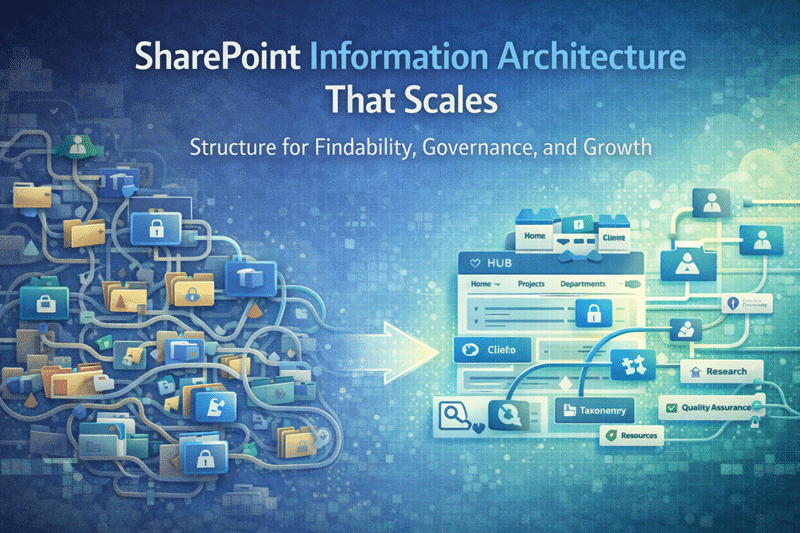
Build Strong Foundations with Information Architecture, Taxonomies, and Folksonomies
Ken kicked off the session with an introduction—and refresher—on information architecture, focusing on taxonomies and folksonomies.
He explained how organizations can:
Design structured taxonomies to improve consistency and findability
Leverage folksonomies to reflect how users naturally describe content
Balance control and flexibility as environments grow
Refine aging or inconsistent metadata models
Whether you’re just starting out or revisiting an older SharePoint environment, intentional information architecture is the foundation for search, governance, and AI readiness. This work closely aligns with dataBridge’s SharePoint Information Architecture & Metadata services.
Work Faster in Microsoft Teams with Slash Commands
Next, John demonstrated slash commands in Microsoft Teams—shortcuts that allow users to access features directly from the message compose box.
With slash commands, users can:
Quickly access common actions using
/Reduce clicks and context switching
Navigate Teams more efficiently
Although simple, these shortcuts significantly improve day-to-day productivity. As Teams continues to serve as a front door to SharePoint and Microsoft 365, small usability improvements like this contribute to better adoption overall—an area often addressed through Microsoft 365 Adoption & Optimization.
Preview Files Directly in Microsoft Teams Chats and Channels
John also covered a recent enhancement to file previews in Microsoft Teams. Users can now see inline previews of images, PowerPoint files, and PDFs directly within chats and channels.
This update allows users to:
Quickly scan shared files
Understand content without opening files
Stay focused within the conversation
While seemingly minor, this improvement supports faster collaboration and reinforces the importance of consistent file organization and permissions—both of which depend on strong SharePoint structure behind the scenes.
Automate Metadata with Autofill Columns in SharePoint Syntex
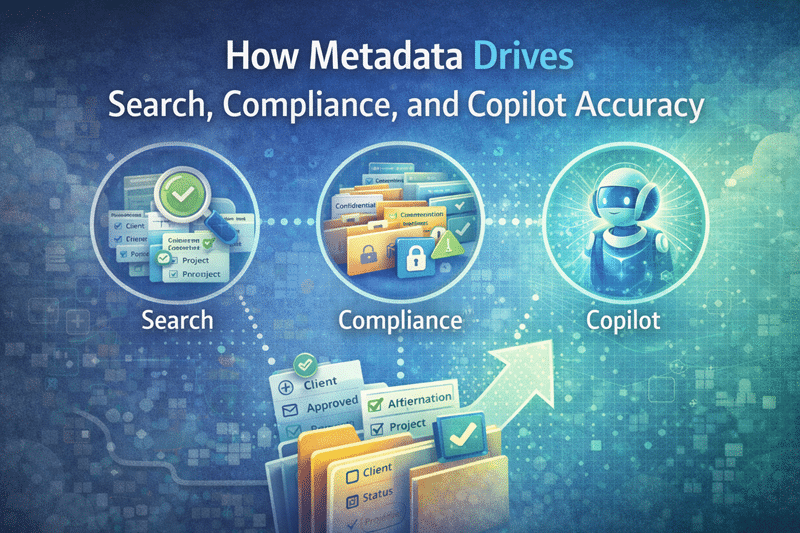
Leona then introduced Autofill columns in SharePoint Syntex, a powerful capability that uses generative AI to classify and extract information from documents automatically.
With Autofill columns, organizations can:
Use natural language prompts to extract metadata
Automatically populate columns based on document content
Reduce manual tagging and user effort
Improve consistency and search accuracy
By streamlining metadata application, Autofill columns help organizations scale content management without increasing administrative burden. This capability is especially impactful when paired with well-designed taxonomies and governance models defined through SharePoint Architecture & Governance.
Modernize Page Design with the New Banner Web Part
Finally, Katie walked through enhancements to the SharePoint page title area, including the introduction of the new Banner web part.
With these updates, content owners can:
Add a new banner experience to pages
Use multiple banners—or none at all
Remove the mandatory title area
Create cleaner, more flexible page designs
These changes give organizations greater control over page layout and branding while still leveraging modern SharePoint experiences. When used thoughtfully, these design options support usability without sacrificing consistency—a core principle of SharePoint Design & Development.
Why These Features Matter Together
Although these updates span information architecture, Teams usability, AI-powered automation, and page design, they all point to the same conclusion: modern SharePoint works best when structure leads and tools follow.
Organizations that succeed invest in:
Clear information architecture
Practical governance models
Automation that reduces friction
Design choices that improve usability
If your environment is growing—or starting to feel disorganized—this is often a sign that it’s time to step back and reassess. A SharePoint Discovery & Readiness Assessment can help identify where structure, governance, and adoption need to evolve together.