
Introduction to SharePoint Enterprise
SharePoint Enterprise Is Built for Scale and Complexity
SharePoint Enterprise represents the most advanced use of Microsoft SharePoint, designed specifically to support the complex needs of large and growing organizations. Rather than focusing solely on document storage, SharePoint Enterprise delivers a comprehensive platform for content management, collaboration, security, automation, analytics, and governance at scale.
As organizations grow, content volume increases, regulatory requirements tighten, and collaboration spans departments and systems. SharePoint Enterprise addresses these challenges by providing enterprise-grade capabilities that go far beyond basic collaboration.
Enterprise Security and Compliance Are Foundational
First and foremost, security and compliance sit at the core of SharePoint Enterprise.
Organizations gain granular control over permissions, allowing them to define access based on roles, teams, and business context—rather than individuals. As a result, sensitive information stays protected while collaboration remains efficient.
In addition, SharePoint Enterprise supports advanced compliance features such as:
-
Data Loss Prevention (DLP)
-
eDiscovery and legal holds
-
Information Rights Management (IRM)
-
Retention and sensitivity labeling
Together, these capabilities help organizations meet regulatory requirements while reducing risk. However, these features only work as intended when security and structure are designed correctly, which is why many enterprises rely on a SharePoint Security & Compliance strategy instead of default settings.
Advanced Insights Through Business Intelligence
Beyond security, SharePoint Enterprise enables organizations to turn content and data into insight.
By integrating with Microsoft Power BI, SharePoint Enterprise allows teams to build interactive dashboards, reports, and visualizations directly from SharePoint lists, libraries, and connected data sources. Consequently, decision-makers gain real-time visibility into operations without relying on disconnected reporting tools.
This integration supports informed decision-making across departments and works best when SharePoint data is structured intentionally—an area often addressed through SharePoint Strategy & Roadmapping.
Workflow Automation at Enterprise Scale
In addition to analytics, SharePoint Enterprise plays a central role in workflow automation.
Through native integration with Microsoft Power Automate, organizations can automate repetitive tasks, standardize approvals, and orchestrate processes that span SharePoint, Microsoft Teams, Outlook, and third-party systems. As a result, teams reduce manual effort, minimize errors, and move work forward faster.
However, enterprise automation depends heavily on data consistency, permissions, and governance. Without those foundations, workflows become fragile over time. This is why automation initiatives often align closely with SharePoint & Microsoft 365 Integration planning.
Designed to Scale With the Organization
Another defining characteristic of SharePoint Enterprise is scalability.
Whether deployed historically in multi-server farms or, today, across Microsoft 365 services, SharePoint Enterprise supports large user populations, high content volumes, and performance demands that grow over time. Moreover, organizations can extend SharePoint through configuration, integration, and development to support evolving business needs.
That said, modern SharePoint success depends less on customization and more on strong architecture, governance, and patterns. Enterprises that design for sustainability reduce long-term maintenance and increase adoption—principles reinforced through a solid SharePoint Governance Framework.
Preparing SharePoint Enterprise for AI and the Future
Today, SharePoint Enterprise also serves as the foundation for AI-powered tools like Microsoft Copilot.
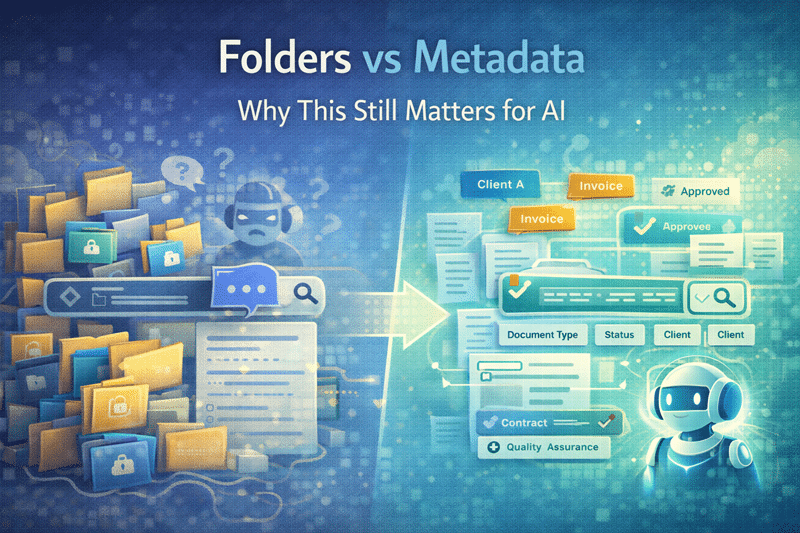
Copilot relies on SharePoint content, permissions, metadata, and structure to generate accurate and trustworthy responses. Therefore, enterprises that invest in structure, governance, and lifecycle management see far greater value from AI initiatives than those that treat Copilot as a simple add-on.
This makes Copilot readiness a natural extension of SharePoint Enterprise planning rather than a separate initiative.
The Bottom Line
Ultimately, SharePoint Enterprise is not just a larger version of SharePoint—it’s a strategic platform for enterprise collaboration, governance, automation, analytics, and AI readiness.
When organizations design SharePoint Enterprise intentionally, they:
-
Protect sensitive information at scale
-
Enable meaningful collaboration across teams
-
Automate complex business processes
-
Turn data into actionable insight
-
Build a sustainable foundation for AI
In short, SharePoint Enterprise succeeds when it’s treated not as a tool—but as an enterprise system designed to evolve with the organization.
Related Resources
The Complete Guide to Building a Modern SharePoint Intranet
Industry-Specific SharePoint Intranet Solutions
Healthcare SharePoint Intranet Services
Financial Services SharePoint Intranet Services
Manufacturing SharePoint Intranet Services
Professional Services SharePoint Intranet Services
Education SharePoint Intranet Services